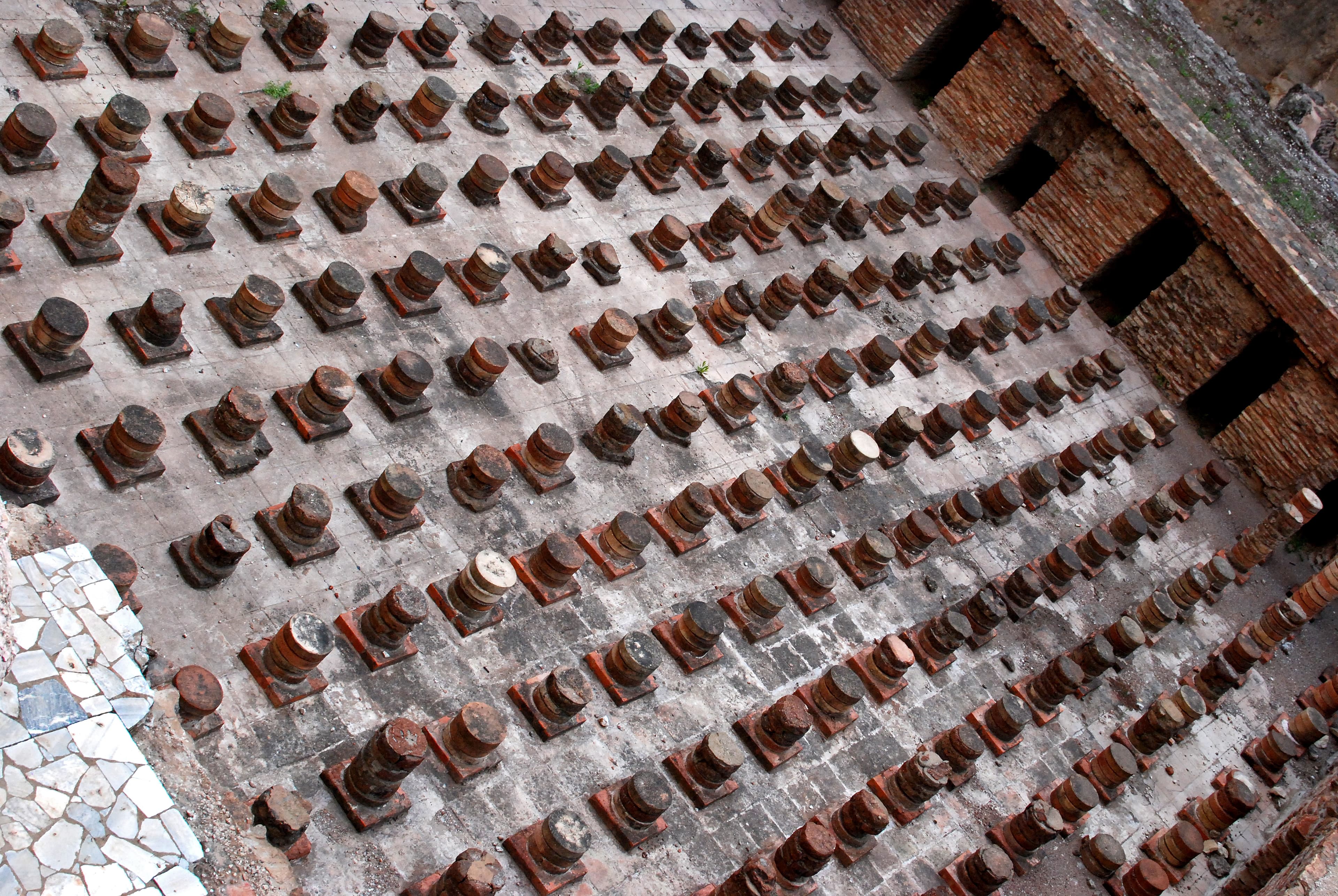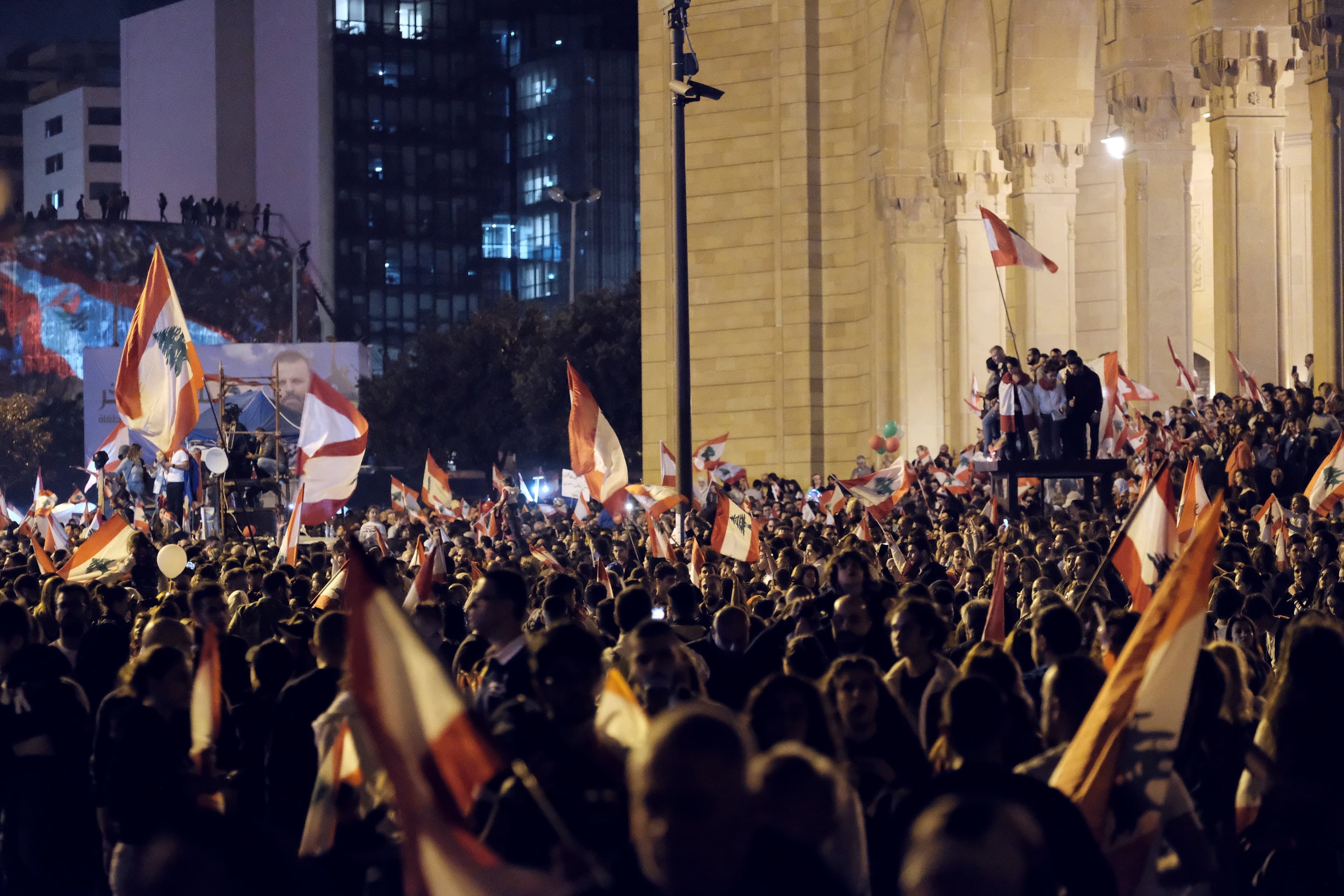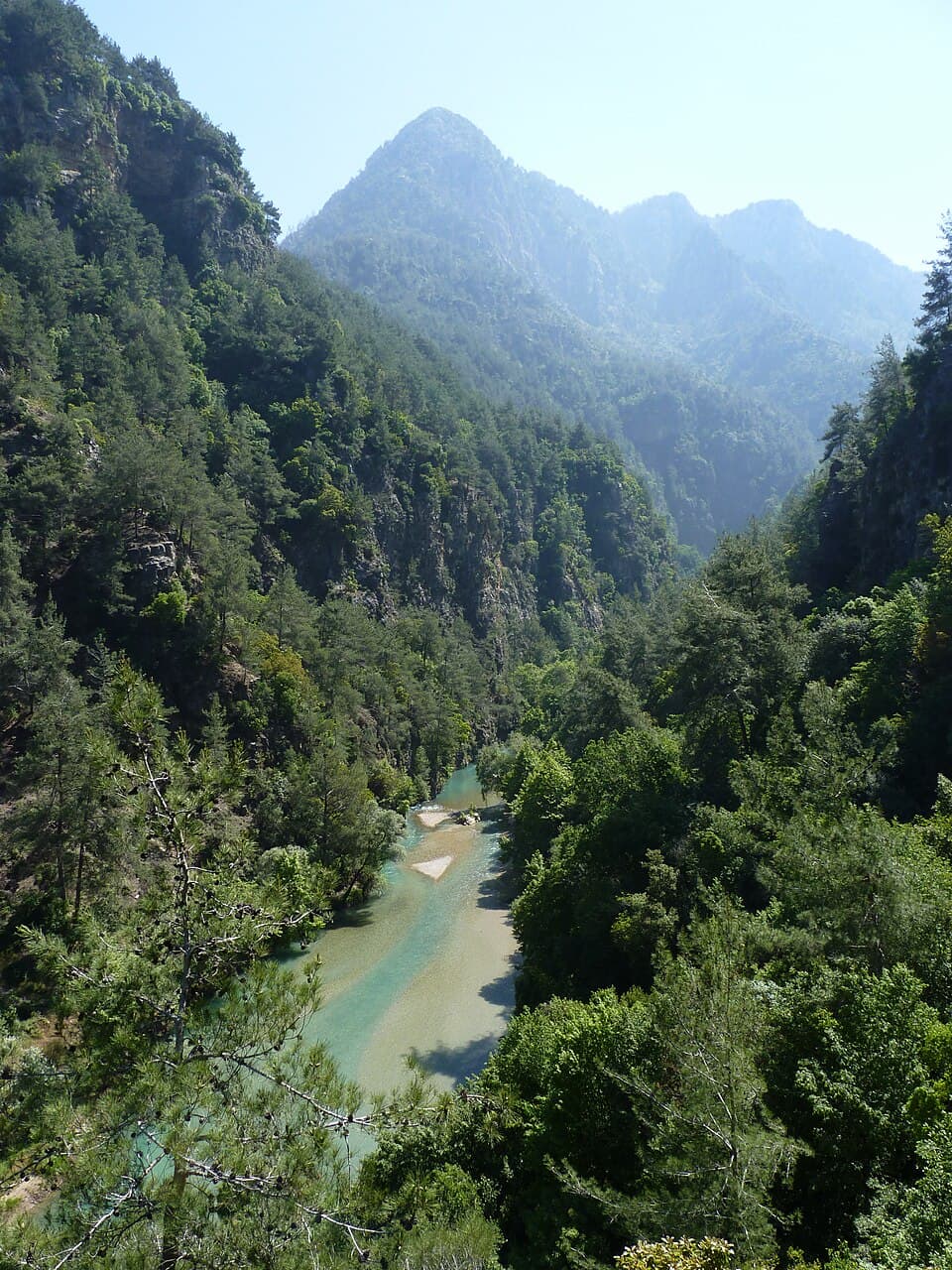


The phrase buffer zone sanitizes what the zone is made of. It is made of orchards people cannot tend, schools children cannot enter, roads that become military corridors, houses converted into coordinates, and families waiting in borrowed rooms for a return date nobody can promise. Military language turns inhabited places into depth. People do not experience their villages as depth. They experience them as inheritance.
Essay
The Rubble Zone
Israel's old security-zone logic has returned to the south, promising calm through distance while producing the grievance Hezbollah knows how to use.
Southern Lebanon is where Israel repeatedly mistakes a map for a solution. Draw a line. Empty a strip. Occupy the heights. Patrol the roads. Call the result a buffer. Then wait for the same lesson to return with new dead.
The logic is seductive because it looks geometric. If rockets come from here, push fighters over there. If villages shelter militants, empty the villages. If the border feels exposed, create depth. Military maps encourage this kind of thinking because maps cannot show humiliation, revenge, inheritance, recruitment, or the private memory of a child watching a house become a crater. The map shows distance. It does not show what distance costs.
The new language of a "yellow line" in southern Lebanon belongs to an old Israeli habit. It promises security through controlled emptiness: no civilians, no fighters, no ambiguity, only a managed zone of denial. But Lebanon has already hosted this experiment. It was called the security zone. It lasted from 1985 to 2000. It did not produce security. It produced Hezbollah as a mature military-political force.
II.The Experiment Already Ran
The first security zone was not a footnote. It was a fifteen-year laboratory in the failure of occupation as counterinsurgency. Israel and the South Lebanon Army held territory in the south after the 1982 invasion and the later pullback. The premise was that a local proxy plus Israeli depth would protect northern Israel. The effect was to give Hezbollah terrain, grievance, legitimacy, and a continuous military problem around which to build an organization.
Every occupation tells itself that it is temporary. Every local community learns that temporary can become a generation. Checkpoints become biographies. Collaborators become family histories. Detention centers become political universities. Funerals become recruiting offices. The occupier measures the cost in soldiers and budgets. The occupied measure it in stories. Stories are lighter to carry and harder to defeat.
Israel withdrew in 2000 not because Hezbollah conquered Tel Aviv, but because the zone became a strategic liability. The casualties, the proxy dependence, the absence of a convincing end-state, and the growth of Hezbollah's legitimacy made the occupation more expensive than the depth it bought. That is the paradox of southern Lebanon: the longer Israel stays to reduce the threat, the more material Hezbollah has for the narrative that sustains the threat.
III.The Buffer That Buffers Nothing
A buffer zone can change the location of danger while leaving the political production of danger intact. Hezbollah operates as an organization, a memory system, a welfare network, a regional instrument, and a claim about who protected the south when the Lebanese state did not. Flattening or emptying border villages may disrupt infrastructure. It also writes the next paragraph of the claim.
The security zone gives Hezbollah a place to narrate the problem it claims to solve.
Hezbollah still carries responsibility for the trap. The party turned the south into a front for regional strategy, embedded military decision-making in communities that then pay the price, and used resistance legitimacy to protect domestic veto power. The party's choices made southern civilians vulnerable to wars they did not democratically authorize. The south has been defended and captured by the same structure.
Lebanese politics keeps trying to forbid this double truth. Israel's violence is real. Hezbollah's instrumentalization of the south is real. The Lebanese state's abandonment is real. Southern loyalty to the force that fought occupation is real. Southern exhaustion with paying for regional strategy is also real. Remove any one of these realities and analysis turns into recruitment.
But Israeli strategy repeatedly behaves as though destroying the built environment can solve an organizational and political problem. That error is cruel and analytically lazy. Guerrilla organizations do not require normal civic life to operate. They thrive in torn civic life when they can claim to be the only disciplined force still standing. A demolished village can be harder to govern than a living one. Rubble carries politics.
Rubble changes the evidence available to every side. Israel can point to cleared terrain and call it security. Hezbollah can point to cleared terrain and call it proof. The Lebanese state can point to cleared terrain and call for aid. Donors can point to cleared terrain and call for stabilization. The village itself becomes less a place than a document everyone cites for a different argument.
IV.The Lebanese Absence
The missing actor in every version of this story is the Lebanese state. Resolution 425 assumed Lebanese authority could eventually return to the south. Resolution 1701 assumes the Lebanese army and UNIFIL can secure the area south of the Litani. The 2024 ceasefire arrangements again rely on the Lebanese state as the entity that should prevent armed groups from operating in the south. On paper this is correct. In practice it names the absence around which the entire conflict is organized.
The Lebanese army is asked to become sovereign in the one region where sovereignty has been most violently contested by Israel, Hezbollah, the Syrian legacy, Iran, the United States, UNIFIL, local communities, and memories of abandonment. It is underfunded, politically constrained, and expected to perform a task no army can perform without a national political settlement behind it. Deploying soldiers is not the same as transferring authority.
Authority requires more than the right to stand at a checkpoint. It needs the right to tell a party no, the capacity to protect civilians after saying no, the money to keep soldiers fed, the courts to punish violations, the diplomacy to bind Israel, and the trust of villagers who believe the state will still be there after the cameras leave. Lebanon has uniforms in the south. It has not yet built that chain.
The south becomes a test Lebanon keeps failing before the exam begins. The state cannot defend the territory alone, so Hezbollah claims necessity. Hezbollah claims necessity, so Israel claims the state is absent. Israel acts on that absence, deepening the grievance that sustains Hezbollah's necessity. The loop is perfect. Everyone has evidence. Nobody has a solution.
V.What Security Would Require
Real security for northern Israel and southern Lebanon would require the one arrangement almost nobody invests in seriously: a Lebanese state with enough legitimacy, military capacity, economic support, and political cover to monopolize force without appearing to be the contractor for an Israeli demand. Bombed villages cannot produce that state. Neither can Hezbollah's private war power, nor envoys recycling the same resolution without the state that can implement it.
Security would require reconstruction that does not pass through sectarian ownership, army deployment linked to local trust, border arrangements that bind Israel as well as Lebanon, and a political process that separates the defense of southern communities from Hezbollah's regional autonomy. Every word in that sentence is difficult. That is why the easier policy returns: lines, zones, patrols, empty land.
The south is tired of being converted into other people's proof. Israel uses it to prove deterrence. Hezbollah uses it to prove resistance. Lebanese factions use it to prove their rivals' treason. Foreign diplomats use it to prove the need for one more framework. The people who live there prove, by surviving, that every abstraction has a landlord, a field, a mother, a shop, a grave.
The next occupation will not solve the old one. The next buffer will not buffer the memory it creates. Southern Lebanon has taught this lesson for half a century. The tragedy is that everyone keeps arriving with a ruler and calling it strategy.
Notes and Sources
UN Security Council Resolution 425, calling on Israel to withdraw from Lebanese territory and establishing UNIFIL: https://unscr.com/en/resolutions/425/
UNIFIL background on the 1978 invasion, the Blue Line, and subsequent mandate: https://unifil.unmissions.org/en/background
UN Security Council Resolution 1701: https://unscr.com/en/resolutions/1701
Le Monde, "In Lebanon, Israel establishes an uninhabited buffer zone behind a 'yellow line'," April 23, 2026: https://www.lemonde.fr/en/international/article/2026/04/23/in-lebanon-israel-establishes-an-uninhabited-buffer-zone-behind-a-yellow-line_6752747_4.html
Al Jazeera, "Israel says established a 'yellow line' in Lebanon," April 18, 2026: https://www.aljazeera.com/news/2026/4/18/israel-says-established-a-yellow-line-in-lebanon-as-it-has-in-gaza
Harel Chorev et al., scholarship on the Israeli security zone in southern Lebanon, 1985-2000.
Augustus Richard Norton, Hezbollah: A Short History, for Hezbollah's development during and after the occupation.
Local research archive: `RESEARCH/israel's_security_zone_paradox_in_lebanon.md`; `RESEARCH/lebanon's_dragonfly_trap_conquest,_corruption,_and_historical_recurrence.md`.