

Lebanese Academic / الأكاديمي اللبناني
The country, not the crisis.
The country, not the crisis.البلد، لا الأزمة.Beirut · Levant · Diasporaبيروت · المشرق · المهجر

Publishing writing that decodes power and preserves memory.

نُصدِر كتابةً تُفكّك السلطة وتصون الذاكرة.

Essay

Sovereignty Theatre

Every patron praises Lebanese sovereignty at the exact volume that keeps Lebanon useful.

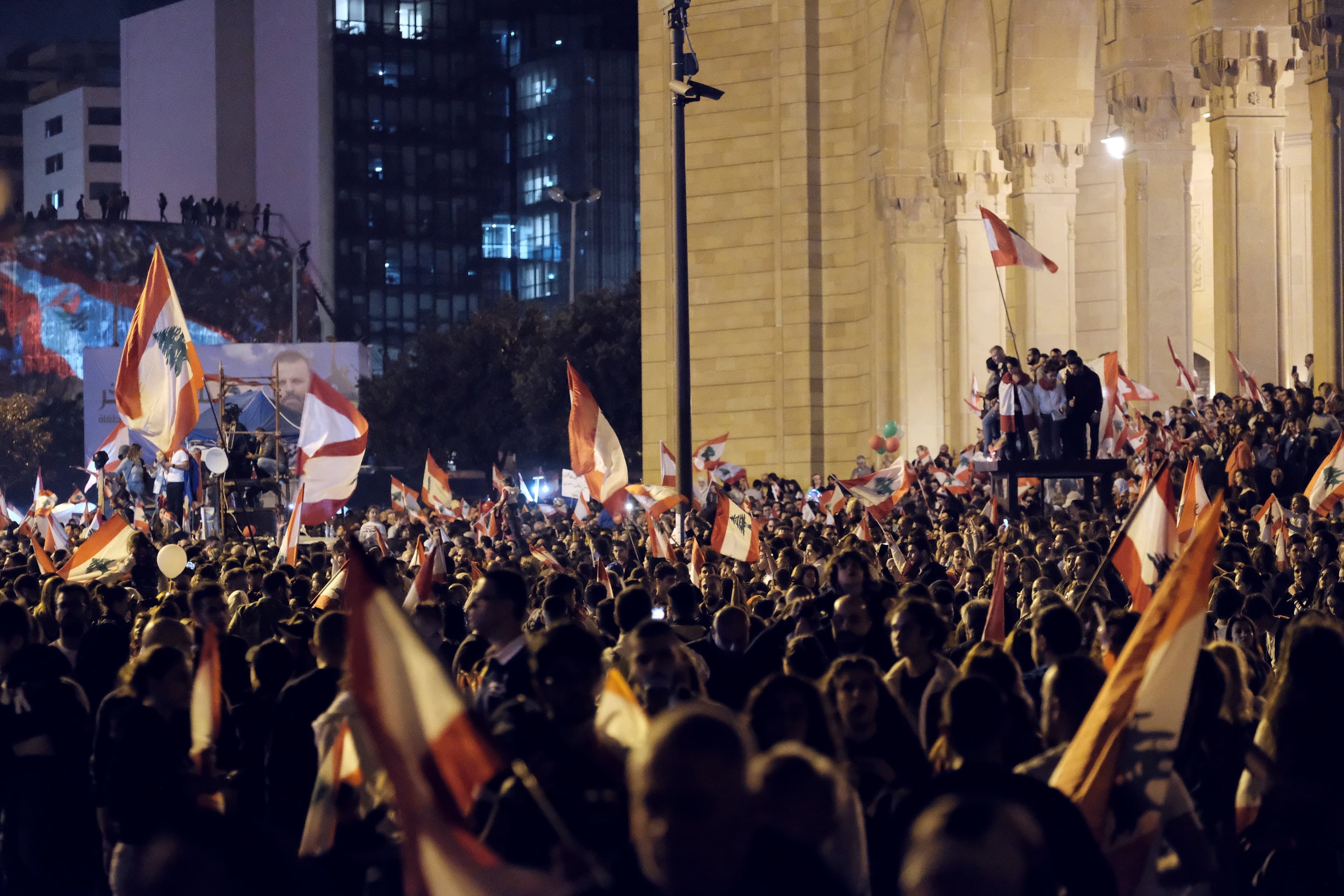
The Lebanese state is very good at the choreography of sovereignty. Flags stand in the right place. Ministers receive envoys in the right rooms. The communiques contain all the expected nouns: stability, reform, borders, institutions, Resolution 1701. The staging works because command would endanger too many arrangements at once.

The scene is familiar. A foreign envoy arrives. The prime minister receives him. The flags stand behind them with theatrical symmetry. The communique mentions stability, reform, Resolution 1701, reconstruction, institutional capacity, border control, and the exclusive authority of the Lebanese state. Everyone nods gravely. The envoy leaves. The state remains unable to collect electricity bills evenly, control its ports fully, disarm non-state actors, prosecute financial crimes, appoint officials without sectarian bargaining, or tell a foreign patron no.

The performance has value. It produces loans, postponements, diplomatic cover, donor conferences, ceasefire frameworks, aid packages, and the illusion that the international system is negotiating with a sovereign actor. The stage is real. Authority remains somewhere offstage.

I.The Patrons of Sovereignty

Every external actor claims to support Lebanese sovereignty. Iran supports it against Israel and the United States while sustaining Hezbollah's regional military role. The United States supports it against Iran while shaping the Lebanese army, banking rules, and diplomatic ceiling. France supports it with sentimental imperial melancholy and an astonishing faith that Paris still possesses a Lebanese vocation. Saudi Arabia supports it when Lebanon is not acting as an Iranian platform. Israel supports it whenever Lebanese sovereignty means restraining Hezbollah and ignores it whenever Israeli aircraft, shells, or buffer-zone designs cross the border. Syria historically supported it by occupying the country in the name of stabilizing it.

The joke at the center of Lebanese diplomacy is that a fully sovereign Lebanon would be unbearable to almost everyone currently praising Lebanese sovereignty. It would say no to Iranian weapons routes, no to Israeli raids, no to Saudi money as political leverage, no to French tutelage, no to American red lines, no to Syrian interference, no to the habit of treating Beirut as a conference room for other people's anxieties. Nobody wants that Lebanon enough to pay its cost.

External patrons prefer managed sovereignty. The state should be strong enough to sign agreements, absorb blame, secure borders when convenient, receive funds, and supply ministers who can be pressured. It should not be strong enough to become strategically independent. A client with a flag is easier to manage than a state with a will.

Lebanese factions understand this perfectly. Each performs sovereignty in the dialect of its patron. One faction says sovereignty means resistance. Another says sovereignty means neutrality. Another says sovereignty means Arab legitimacy. Another says sovereignty means international legality. In practice, each definition opens a different foreign door. Lebanese foreign policy becomes a lobby map.
II.The Resolution as Prop

Resolution 1701 is the great prop of sovereignty theatre. It says what every reasonable person says they want: no armed authority in southern Lebanon other than the Lebanese state and UNIFIL, support for Lebanon's territorial integrity, a cessation of hostilities, and the extension of state authority. The text is clear enough. The political conditions for implementing it have never existed.

For Hezbollah, full implementation threatens the military architecture that sustains the party's regional role and domestic veto. For Israel, full implementation would also require an end to violations and a commitment to Lebanese territorial integrity it has not consistently honored. For the Lebanese state, full implementation would require army capacity, political consensus, and institutional authority it does not possess. For foreign sponsors, 1701 is useful precisely because it allows them to demand impossible things in the language of international law.

So 1701 becomes a diplomatic ritual. Everyone invokes it. Nobody pays for the state that would make it real. The Lebanese army is praised as the national institution while being asked to perform missions far beyond its budget and political protection. UNIFIL is asked to monitor a reality no peacekeeping force can fix without a sovereign partner. Envoys speak of deployment as if men in uniform can substitute for a political settlement. The border becomes a grammar lesson in absent authority.

International law thus becomes Lebanese theatre. The text is placed on the table; the table has no legs.

The army suffers most from this ritual because it is the one institution almost everyone wants to use as an alibi. Hezbollah invokes the army's weakness to justify retaining arms. Hezbollah's rivals invoke the army's legitimacy to demand disarmament. Foreign governments invoke the army as the acceptable recipient of aid. Citizens invoke the army because it is one of the last national symbols that still feels less contaminated than the parties. Each invocation is partly true. None gives the army the political mandate required to become the state.

The army cannot be both sacred symbol and actual sovereign instrument if every faction reserves exceptions for itself. A sovereign army must sometimes disappoint the community that loves it. Lebanon praises the army most when it is not forced to decide.

III.Reform as Performance

The same pattern governs economic reform. The IMF and World Bank say, correctly, that Lebanon needs banking restructuring, capital controls, fiscal reform, electricity reform, transparent public finance, and accountability. Lebanese governments say, correctly, that they are committed to reform. Parliament debates laws. Committees form. Drafts circulate. Deadlines pass. Depositors wait. The political class survives.

The reason is not mysterious. Real reform would assign losses. Assigning losses would name winners and thieves. Naming winners and thieves would attack the coalition that controls parliament, banks, ministries, courts, and media. So reform is performed at the level of vocabulary. The same political class that presided over collapse adopts the language of recovery. Governance, transparency, accountability, resilience, stabilization: the donor lexicon becomes a costume rack.

The international community is not innocent in this theatre. It often prefers an inadequate Lebanese commitment to the admission that there is no credible counterpart. It needs someone to receive the communique, someone to initial the framework, someone to appear at the conference. Lebanon's ruling order understands this hunger for process and feeds it. The result is an economy of staged seriousness: everybody knows the reform is insufficient, but the performance allows everyone to postpone the harder conclusion.

Here is the counterparty problem. Diplomacy requires an address. Aid requires a recipient. Agreements require a signature. Lebanon supplies all three while withholding the fourth requirement: an authority capable of making the signature travel downward into reality. The international system then mistakes contact for capacity. It has met a minister, therefore it has met the state. In Lebanon those are not the same encounter.

IV.The Sovereignty Nobody Wants

Actual sovereignty would be ugly before it became noble. It would require a state capable of disappointing every patron, investigating every party, closing profitable illegalities, deploying law where custom now rules, and forcing citizens to discover that a state is not only protection but obligation. Taxes would have to be collected. Subsidies would have to be rationalized. Port authorities would have to become answerable. Judges would need security. The army would need doctrine, money, and a political mandate. Parties would have to become parties rather than substitute states.

Sovereignty stays safer as a slogan. The slogan lets every faction accuse its rival of betrayal while preserving its own exception. Hezbollah can demand sovereignty against Israel while limiting sovereignty at home. Its rivals can demand sovereignty against Hezbollah while inviting foreign pressure to do what they cannot build internally. External actors can demand sovereignty while sponsoring the very clients that fragment it.

The citizen is left watching the play. The state announces authority. The faction negotiates the real terms. The patron finances the scenery. The envoy praises progress. Then the lights go out, and the generator turns on.

The generator is no accidental metaphor. It is the sovereignty theatre of daily life. The state promises electricity as a public right. The private network delivers electricity as a negotiated privilege. The citizen pays both and thanks neither. In the evening, the city glows from thousands of little sovereignties humming under balconies.

Lebanon needs the boring, frightening, expensive infrastructure of sovereignty: courts that survive pressure, budgets that reveal priorities, soldiers paid enough to serve, schools that teach one history, borders controlled by one authority, and parties forced to compete over policy rather than custody. Until that exists, every speech about sovereignty should be treated as an audition.

Declarations are plentiful. The missing thing is a set of institutions capable of making declarations matter.

Notes and Sources
  1. 1

    UN Security Council Resolution 1701: https://unscr.com/en/resolutions/1701

  2. 2

    UNIFIL mandate and 1701 implementation background: https://unifil.unmissions.org/unifil-mandate

  3. 3

    Announcement of a Cessation of Hostilities and Related Commitments on Enhanced Security Arrangements and toward the Implementation of UNSCR 1701, November 26, 2024: https://www.peaceagreements.org/media/documents/IL_LB_241126_Announcement_of_a_Cessation_of_Hostilities_and_Related_Commitments.pdf

  4. 4

    World Bank, "Lebanon's Crisis: Great Denial in the Deliberate Depression": https://www.worldbank.org/en/news/press-release/2022/01/24/lebanon-s-crisis-great-denial-in-the-deliberate-depression

  5. 5

    IMF staff statements and Article IV materials on Lebanon's delayed reforms and financing preconditions: https://www.imf.org/en/Countries/LBN

  6. 6

    Fawwaz Traboulsi, A History of Modern Lebanon, for the external-patronage architecture of modern Lebanese politics.

  7. 7

    Local research archive: `RESEARCH/analysing_lebanese_politics_structurally.md`; `RESEARCH/analyzing_pro-hezbollah_parliament_member_interview.md`.